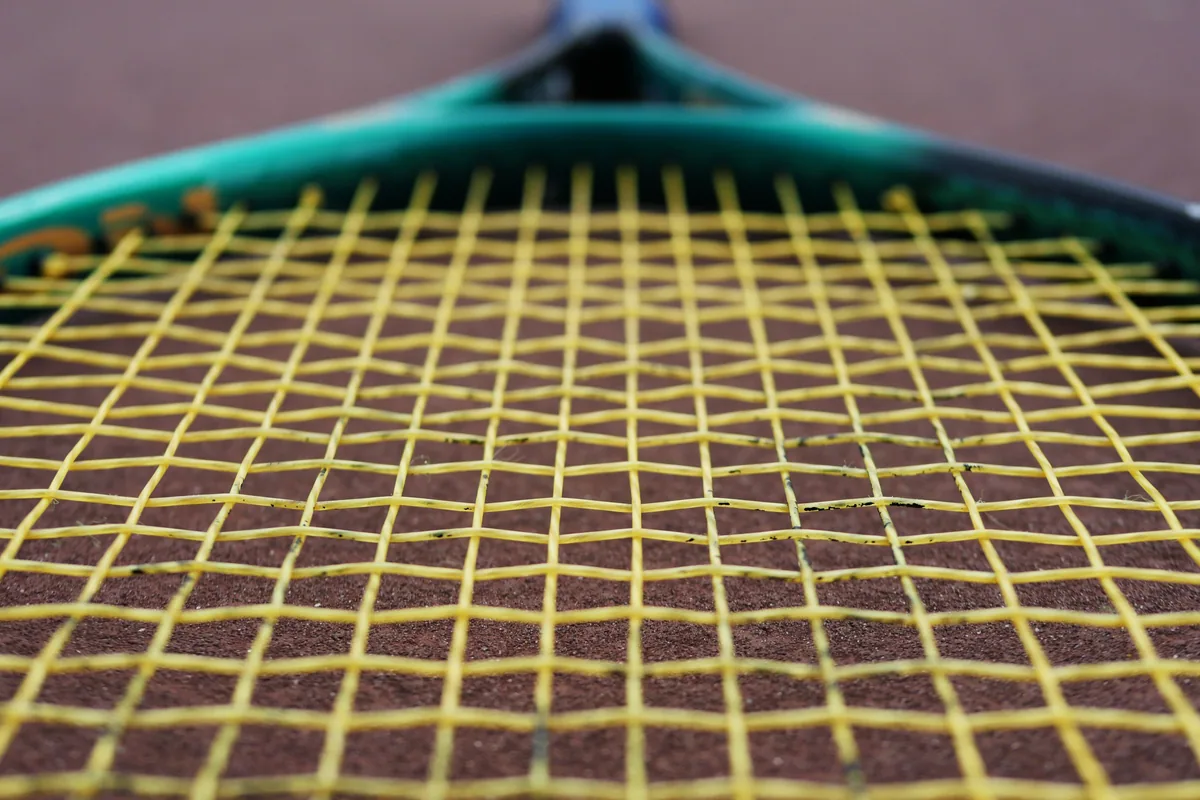
The string pattern tells you how many main and cross strings a racket has. Use it alongside head size and your string setup when comparing rackets.
Read the two numbers
A 16 × 19 pattern has 16 main strings running along the racket and 19 cross strings running across it. An 18 × 20 pattern has 18 mains and 20 crosses. These numbers describe the layout, not the string thickness or the tension used to install it.
Compare the spacing as well as the count
Wilson describes 16 × 19 as an open string bed and 18 × 20 as a denser one in its selection guide. Head size and the placement of the strings also matter. Look at the center of each racket rather than assuming that every racket with the same count has identical spacing.
Match the exact model and version
Blade 98 V8 has separate stringing instructions for its 16 × 19 and 18 × 20 versions. Compare generation, head size, weight, balance and pattern for the exact models.
Keep the string setup comparable
Use comparable strings when trying different patterns. Record the string model, diameter, installation tension and date for each racket.
Try the shots you actually use
Use the same balls and court, and alternate between the rackets. Start with groundstrokes, then include serves, returns and volleys. Notice whether your normal swing produces the depth and direction you want.
- Write down the exact racket and string setup.
- Compare normal rallies as well as rushed returns.
- Repeat the trial if different strings make the result hard to interpret.
Keep pattern and string choice separate
Choosing a different pattern means choosing a different frame configuration. When restringing your current racket, follow its own stringing instructions. Discuss material, diameter and tension with your stringer rather than asking them to turn a 16 × 19 frame into an 18 × 20.