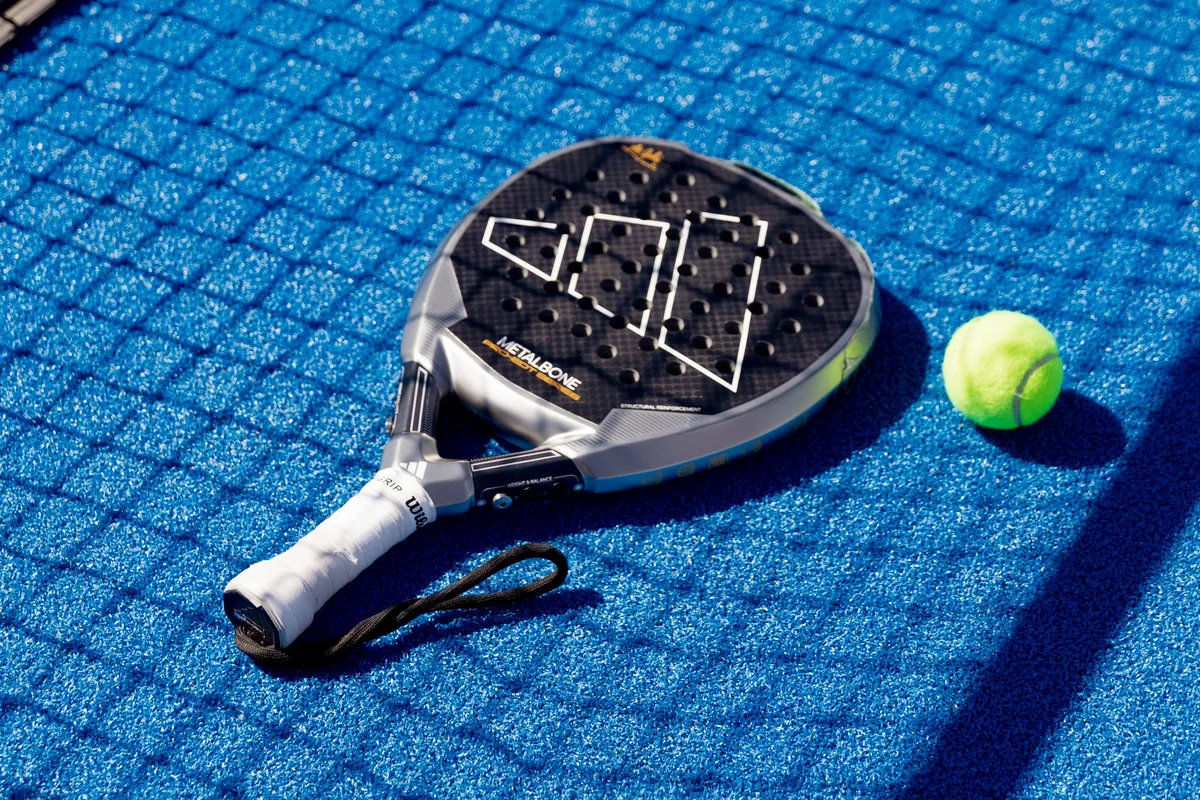
Padel and tennis balls have different diameter and rebound limits, but share the same weight range. Common pressurized padel balls generally have lower internal pressure than pressurized tennis balls. Similar yellow felt does not make them interchangeable.
Padel Ball vs. Tennis Ball Specifications
This comparison covers standard padel balls and medium-speed Type 2 tennis balls. Children’s training balls and special high-altitude models are outside its scope.
| Specification | Standard padel ball | Type 2 tennis ball |
|---|---|---|
| Diameter | 6.35–6.77 cm | 6.54–6.86 cm |
| Weight | 56.0–59.4 g | 56.0–59.4 g |
| Standard rebound test | 135–145 cm | 135–147 cm |
What Does the Pressure Difference Mean?
The air inside a pressurized ball contributes to its bounce. Padel balls generally have lower internal pressure than common pressurized tennis balls. Pressureless tennis balls also exist, so a single pressure figure cannot describe every tennis ball.
Can You Use a Tennis Ball for Padel?
Use a ball made for padel. Being a tennis ball does not mean a model is also approved for padel. Official FIP competitions use approved padel balls, with the organizer specifying the brand and model. For practice, using the club’s padel model helps keep the ball consistent between sessions.
Is a Padel Ball Always Smaller, Lighter and Lower-Bouncing?
It does not have to be lighter: both standards use the same weight range. Their diameter ranges overlap too. The padel rebound ceiling is 2 cm lower, but the ranges overlap from 135 to 145 cm. A rebound of either 135 cm or 145 cm falls within both ranges.
Can an Old Tennis Ball Replace a Padel Ball?
A tennis ball losing pressure and bounce does not turn it into a padel ball. Wear is different from being made and approved for padel. Store tennis and padel balls separately to avoid mixing them up.
What Should You Look for When Buying?
Use the sport and full model name on the package rather than color and size alone. One brand may offer several padel balls for different speeds and uses.
- For padel: a padel model, plus any approval required for your competition.
- For tennis: distinguish a standard match ball, a training ball and a pressureless practice ball.
- At high altitude: use the version specified for your location.